

Few machines on Earth inspire the same mix of awe, fear, and engineering obsession as the modern fighter jet. In 2026, the top of the fighter world is a wild convergence of stealth shaping, sensor fusion, electronic warfare, networked combat, and raw aerodynamic brutality. The best jets are no longer just fast dogfighters — they are airborne quarterbacks, stealthy data hubs, and precision strike platforms wrapped in absurdly refined metal and composites.
Ranking the world’s most advanced fighters is never simple. Some aircraft are proven combat veterans, others are still maturing in service, and a few are still emerging from development with breathtaking potential. So this list balances capability, survivability, sensor sophistication, multirole flexibility, production maturity, and future growth. If a jet can see first, shoot first, survive first, and keep fighting while plugged into a larger kill web, it earns its place.
Top fighter jets in 2026
Here is how the leading contenders stack up this year.
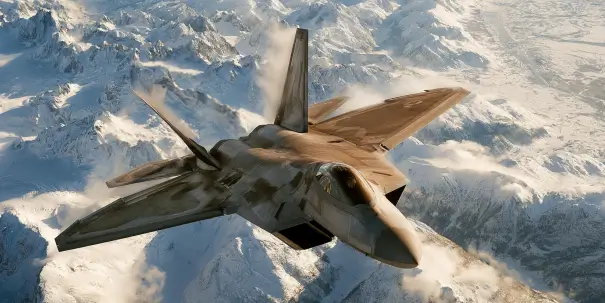
1. Lockheed Martin F-22 Raptor
Even in 2026, the F-22 Raptor remains a benchmark for pure air dominance. It is the stealth fighter that still makes competitors sweat, combining extreme maneuverability, supercruise, low observability, and a brutally effective sensor suite. Its air-to-air performance is legendary, and while it is older than some rivals on paper, the Raptor’s design still feels almost unfair in a close look at the numbers.
The F-22’s strengths are classic but devastating: superb stealth, high thrust-to-weight performance, and excellent situational awareness. It may not carry the newest software-defined everything or the broad international support of newer platforms, but when the mission is to seize the sky, the Raptor remains the apex predator.
2. Lockheed Martin F-35 Lightning II
The F-35 is the multirole heavyweight of the 2026 fighter world. It is not the fastest jet on this list, nor the most agile in a pure dogfight sense, but it may be the most important. Its real genius is sensor fusion: it turns a chaotic flood of radar, infrared, electronic, and offboard data into a coherent battlespace picture for the pilot and the network.
The F-35’s stealth, electronic warfare suite, and massive upgrade path make it a dominant force across air-to-air, strike, suppression of enemy air defenses, and reconnaissance missions. The jet has become the backbone of many allied air arms because it is not just an aircraft — it is a software-evolving combat system that keeps getting better with every block upgrade.
3. Chengdu J-20 Mighty Dragon
China’s J-20 has matured into one of the most significant stealth fighters in the world. It is big, imposing, and designed to contest air superiority at long range. The J-20’s long internal volume gives it room for fuel, weapons, and future avionics growth, while its stealth shaping and increasingly capable engines have steadily improved its credibility as a front-line threat.
What makes the J-20 especially interesting is its likely emphasis on long-range detection and missile employment. In the Western Pacific’s vast distances, that matters enormously. It is a jet built for serious strategic competition, and in 2026 it sits firmly among the world’s most advanced platforms.
4. Sukhoi Su-57 Felon
The Su-57 is Russia’s answer to the fifth-generation fighter question, blending stealth features with high agility and a strong focus on kinetic performance. It is visually dramatic, technologically ambitious, and very much a product of Russian aerospace philosophy: prioritize maneuverability, large weapon capacity, and high-end air combat kinematics.
Its stealth is more limited than some rival designs, but the Su-57’s combination of advanced aerodynamics, thrust vectoring, and modern avionics gives it a unique profile. It is a fascinating machine with serious potential, especially as software, engines, and weapons integration continue to evolve.
5. Eurofighter Typhoon
The Eurofighter Typhoon is proof that a non-stealth fighter can still be terrifyingly relevant when it is highly agile, heavily upgraded, and networked into modern combat systems. In 2026, the Typhoon remains one of the best air superiority fighters in service, with excellent acceleration, climb performance, and a strong radar and weapons modernization pipeline.
With the right loadout and support, the Typhoon is a formidable interceptor and multirole platform. It lacks the low observability of fifth-generation aircraft, but it makes up for that with superb kinematics and a deep upgrade roadmap across Europe’s air forces.
6. Dassault Rafale
The Rafale is the Swiss Army knife of advanced fighters, except it is French, elegant, and packed with serious combat capability. Its broad mission flexibility, excellent electronic warfare systems, and mature integration of precision weapons make it one of the most balanced fighters flying today.
Rafale’s real magic is how it combines agility, survivability, and multirole depth. It can swing from air policing to strike to nuclear deterrence to maritime attack without breaking stride. In a world where flexibility matters as much as stealth, the Rafale remains a top-tier contender.
7. Saab JAS 39 Gripen E
The Gripen E is one of the smartest fighters ever built from a cost-to-capability standpoint. It is not the biggest or stealthiest jet here, but it is packed with modern sensors, powerful electronic warfare gear, and an architecture designed for rapid upgrades and distributed operations.
The Gripen E thrives on clever engineering. It is optimized for dispersed basing, quick turnaround, and high availability. That makes it a nightmare for any adversary trying to suppress an air force that can keep generating sorties from austere locations.
8. Boeing F-15EX Eagle II
The F-15EX is not stealthy, but it is a monster in the payload and endurance categories. It is a modernized brute with huge weapons carriage capacity, advanced avionics, and an impressive radar system. Think of it as a missile truck with fighter DNA — an aircraft that can launch a devastating volume of precision fire while remaining highly relevant in a high-end conflict.
Its value in 2026 comes from pairing with stealth assets. The F-15EX can carry the heavy load while fifth-generation jets find, fix, and cue targets. That makes it an immensely practical and dangerous addition to the modern air combat ecosystem.
9. Shenyang J-16
The J-16 is a potent Chinese strike fighter derived from a proven airframe and refined into a high-end multirole platform. While not a stealth aircraft, it boasts significant payload, modern sensors, and a robust electronic warfare capability. It is an example of how a well-executed non-stealth design can still pose a serious challenge in contested airspace.
The J-16’s ability to carry a wide range of anti-ship, air-to-air, and strike weapons makes it a versatile and dangerous platform in regional power projection scenarios.
10. KAI KF-21 Boramae
The KF-21 Boramae is one of the most exciting new fighters in the world because it represents the leap of a major aerospace power into advanced combat aircraft design. In 2026, it stands as a highly promising 4.5-generation-plus platform with stealth-inspired shaping, modern sensors, and an ambitious growth path toward even greater capability.
The KF-21 is not yet at the maturity of the F-35 or Rafale, but its blend of modern design, international relevance, and upgrade potential makes it a jet to watch closely. It signals that the next generation of air combat is already taking shape across Asia.
The real race in 2026
The most advanced fighter jets in 2026 are not just competing on raw speed or turn rate. They are competing on who sees whom first, who jams whom first, who shares data first, and who survives long enough to fire again. That is why stealth, sensor fusion, electronic warfare, and network integration matter so much.
The air combat of 2026 is less about the lone ace and more about the connected kill chain. The jets on this list represent different answers to the same brutally hard problem: how do you dominate a sky filled with sensors, missiles, drones, and layered air defenses? The answer, increasingly, is to build aircraft that are not just fighters, but flying systems-of-systems.
And that is exactly what makes this era so thrilling. We are watching fighter design evolve at full throttle — stealthier, smarter, more connected, and more lethal than ever before.