


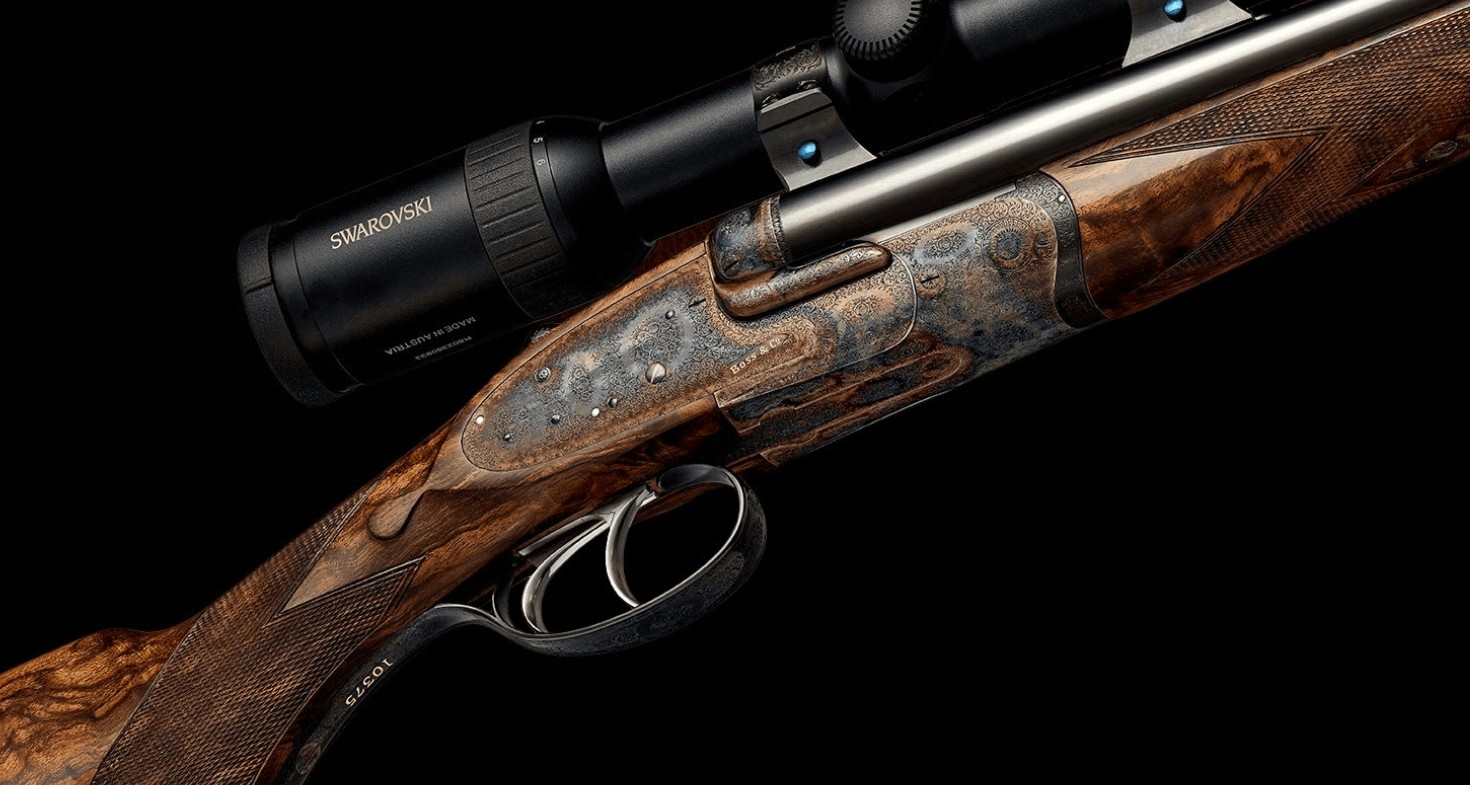
Handmade firearms occupy a strange and enduring place in military history. Long before mass production turned muskets, rifles, and pistols into standardized instruments of war, nearly every weapon was handmade by a smith, a stocker, a barrel-maker, and a finisher. Even in the industrial age, special operations units, resistance movements, frontier communities, and besieged armies often relied on locally made arms when factories were out of reach. Today, the phrase hand made guns can describe anything from a carefully finished custom revolver to a crude improvised weapon, and the difference between the two matters enormously.


If you are evaluating handmade guns as a collector, historian, researcher, or simply a curious enthusiast, the key is to understand what separates a legitimate artisan-made firearm from a dangerous improvisation. Quality handmade guns can reflect old-world craftsmanship and careful proofing; poor examples can be unsafe, inaccurate, and legally problematic. Knowing what to look for means understanding materials, workmanship, mechanical design, provenance, and the historical context in which the firearm was made.
Why handmade firearms still matter
Firearms history is inseparable from hand labor. The matchlock arquebus, the flintlock musket, and the early percussion pistol all relied on individual skill at the bench. Even when the Industrial Revolution introduced interchangeable parts, many prestigious guns remained partly or wholly handmade. British gunmakers in London and Birmingham, American custom shops, and continental houses such as Purdey, Holland & Holland, and Mauser’s finest sporting lines all depended on human craft for fitting, finishing, and regulation.
In wartime, handmade weapons often emerged from necessity. During the Second World War, resistance networks and occupied populations built clandestine pistols and submachine guns in workshops hidden behind machine shops, garages, and farms. Some were ingenious and effective; others were barely functional. Later conflicts produced similar examples in insurgent zones, where access to factory-made arms was restricted. That lineage is important because it reminds us that “handmade” does not automatically mean “high quality” or “safe.”
First thing to identify: what kind of handmade gun is it?
Before judging quality, determine the category. A handmade firearm may be one of several broad types:
- Custom shop firearm — built or finished by a professional gunsmith, usually based on a proven design.
- Traditional craft firearm — a flintlock, percussion rifle, or sidearm made using historical methods.
- One-off experimental firearm — a prototype or workshop-built weapon assembled for function rather than style.
- Improvised or illicit firearm — assembled from available parts, often with minimal safety margins.
This distinction matters because the standards differ. A handmade .45 revolver from a respected smith should be assessed much like any fine firearm: tolerances, timing, finish, and metallurgy. A traditional muzzleloader should be judged by barrel quality, lock function, and historical accuracy. An improvised weapon should raise immediate concerns about legality and safety.
Materials and metallurgy
The first serious indicator of quality is material choice. Firearms live and die by the strength and consistency of their metals. Historically, barrels were forged from wrought iron and later steel, while modern custom guns use properly heat-treated steels, stainless alloys, and engineered polymers. Poorly made handmade guns often reveal themselves in inconsistent stock material, substandard fasteners, or mystery metals with no proof of heat treatment.
Look for the following:
- Barrel steel should show no visible pitting, bulging, or seam irregularity.
- Frame and receiver material should be appropriate to the design and load.
- Fasteners and pins should fit cleanly, not be overdriven or mismatched.
- Wood stocks should be properly grained, sealed, and free from structural cracks around recoil-bearing surfaces.
In historical terms, this is the modern equivalent of proof marks. A Victorian gunmaker’s reputation depended on proofing and inspection; a modern handmade gun should show evidence of the same seriousness, even if the proof house is a private range and the maker is a lone craftsman.
Workmanship: the eye test still matters
Craftsmanship often announces itself before you touch the gun. Examine the overall symmetry, the quality of joint lines, the evenness of finish, and the consistency of the machining or hand filing. On a well-made firearm, small details line up: screw heads are indexed consistently, metal-to-wood transitions are clean, and moving parts cycle without obvious drag or slop.
Warning signs include:
- Uneven gaps between mating surfaces
- Tool marks left where critical surfaces should be smooth
- Poorly centered sights
- Misaligned barrels or cylinders
- Rough, cloudy, or uneven bluing, case coloring, or parkerizing
Handmade does not mean crude. The best traditional craftsmen often left subtle file marks in hidden areas, but the visible exterior was deliberate and harmonious. Think of the difference between a battlefield repair and a bespoke arm from a master shop: both may be handmade, but only one reflects confidence in final presentation.
Mechanical integrity and function
A handmade gun must be judged by mechanical behavior, not appearance alone. Dry function checks, performed safely and legally, can reveal much about design quality. On a revolver, cylinder timing and lockup matter. On a semi-automatic pistol or rifle, feeding, extraction, ejection, and reset must be consistent. On a muzzleloader, lock ignition and barrel fit are central.
Pay attention to:
- Lockup — does the action close solidly, or is there wobble?
- Timing — do rotating or reciprocating components align at the correct moment?
- Trigger feel — is it predictable, or does it stack, creep excessively, or release inconsistently?
- Safety operation — does the safety engage positively, and does it actually block the intended parts?
- Headspace and chamber fit — is there any visible sign that cartridge support is questionable?
Historically, many improvised weapons failed because they copied the outward shape of a proven gun without understanding the internal geometry. That lesson appeared repeatedly in wartime workshops from Europe to Southeast Asia. A gun that looks like a service weapon but lacks proper lockup may be more dangerous to its user than to the enemy.
Fit, finish, and evidence of a maker’s discipline
Craft discipline is often easiest to see in the finish. A true artisan pays attention to the edges you do not notice immediately. Check whether the crown of the barrel is even, whether checkering is cleanly cut, whether the grip panels fit flush, and whether the bore-to-sight relationship is deliberate rather than accidental.
Good handmade firearms often have a coherent aesthetic. They may not be glossy or ornate, but they are purposeful. In contrast, a gun assembled from parts may have contradictory styles: modern screws next to antique furniture, mismatched finishes, or a stock that does not properly support the action. Such combinations are common in one-off projects and can be acceptable only if executed with technical rigor.
Provenance and maker reputation
Perhaps the single most important factor when evaluating handmade guns is provenance. Who made it, when, for what purpose, and with what documentation? A firearm with a paper trail, photographs, maker’s marks, or a well-known workshop origin is far easier to assess than an anonymous piece. In the collecting world, provenance can transform a technically ordinary firearm into a historically significant artifact.
Useful questions include:
- Is the maker identifiable by name, mark, or signature?
- Are there records of purchase, build notes, or correspondence?
- Does the style match the claimed period or region?
- Are there proof marks, inspection stamps, or serial markings?
- Has the gun been described in auction catalogs, museum records, or reference books?
History offers many examples where provenance matters more than finish. A rough partisan submachine gun from occupied Europe may be more significant than a beautifully polished modern custom pistol if the former can be tied to a resistance cell or specific campaign. Documentation anchors the object in time.
Safety signs you should never ignore
With handmade guns, safety is not a secondary issue — it is the issue. Some flaws are cosmetic. Others are disqualifying. Never assume a firearm is safe simply because it cycles or fires once. Insist on a careful inspection by a qualified gunsmith if there is any uncertainty.
Red flags include:
- Visible cracks in the frame, barrel, or stock around high-stress areas
- Bulging, ringed, or damaged barrels
- Improvised welds on pressure-bearing components
- Loose or shifting sights and barrel assemblies
- Evidence of overpressure, corrosion, or amateur chamber work
- Nonstandard ammunition requirements that are unclear or undocumented
In military terms, this is the difference between a weapon fit for service and one that is a liability. Armies have always learned this lesson painfully. A poorly made gun can fail at the moment it is needed most.
Historical authenticity versus practical use
Collectors often want authenticity; shooters want function. Handmade firearms can satisfy both, but not always at once. A historically accurate reproduction of a 17th-century lock may be entirely correct and still cumbersome by modern standards. A contemporary custom build inspired by an old military pattern may be far more usable, but less authentic.
If your goal is historical collecting, evaluate period-correct construction methods, materials, and markings. If your goal is shooting, prioritize safe metallurgy, reliable ignition, and serviceable ergonomics. If your goal is investment, provenance and maker reputation usually matter more than pure utility.
Useful specifications to compare
| Spec | What to look for |
|---|---|
| Barrel condition | Even bore, no bulges, no severe pitting, proper crown |
| Lockup | Solid engagement, minimal play, no abnormal movement |
| Trigger pull | Predictable, consistent, appropriate for design |
| Materials | Known steel, sound wood, proper heat treatment |
| Finish | Uniform, corrosion-resistant, not disguising defects |
| Provenance | Maker identity, records, marks, historical context |
| Safety | No cracks, no improvised repairs, no pressure signs |
The deeper lesson from history
Handmade guns are part of the oldest layer of firearm development. From the village smith who forged a hunting rifle to the wartime mechanic who assembled a resistance pistol, the craft has always balanced ingenuity against danger. The best examples carry forward a long tradition of disciplined metalwork and practical design. The worst are reminders that a firearm is not merely a mechanical object, but a pressure vessel that must be treated with respect.
When chasing handmade guns, look beyond the romance. Look for the maker’s hand, yes, but also the maker’s discipline. Study the materials, the fit, the finish, the action, and the paper trail. A good handmade firearm should feel inevitable, as though every line and surface was placed there for a reason. A bad one will look improvised because it was.
That is the central test: not whether a gun is handmade, but whether it was made with knowledge, restraint, and a clear understanding of what the weapon must do. In that sense, the finest handmade guns stand in the same tradition as the best arms of history — purposeful, reliable, and built with the sober recognition that craftsmanship and survival have always been linked.